Your Emotional Resilience Is Like a Garden: Nurture It with Mindfulness

 Reading Time: 8 minutes
Emotional Resilience: Build Strength, Cope with Stress & Thrive
Ever feel like life’s challenges hit you like a never-ending storm? One moment, you’re thriving, and the next, you’re stuck in your feelings, questioning if you’ll ever feel whole again.
Let me tell you something: emotional resilience isn’t about pretending the rain isn’t falling—it’s about planting seeds that can weather every season.
We all have struggles. We all feel lost sometimes. But resilience isn’t about avoiding hard times—it’s about learning to navigate them with strength and self-compassion.
Just like a garden, resilience needs care, sunlight, water, and, yes, even a little weeding. The good news? You don’t have to be perfect. You just have to keep showing up for yourself.
So grab your journal, take a deep breath, and let’s start cultivating your inner strength.
Table of Contents
- What Is Emotional Resilience (And Why It’s Your Superpower)?
- The Garden Metaphor: How Resilience Grows with Mindfulness
- Where Resilience Meets Trauma: Understanding the Intersection
- Planting the Seeds: Practical Tools to Cultivate Resilience
- Weeding the Mind: Letting Go of What No Longer Serves You
- Harvesting Growth: Creating a Life Rooted in Strength and Compassion
- Conclusion: Your Garden, Your Power
- FAQ: Your Most Pressing Questions About Emotional Resilience
What Is Emotional Resilience (And Why It’s Your Superpower)?
Emotional resilience is your ability to bounce back from life’s challenges—not by avoiding them but by moving through them with grace.
It’s what allows you to experience difficult emotions without letting them define you. And contrary to popular belief, resilience isn’t about being “tough” or unaffected by hardship. It’s about being adaptable, self-aware, and grounded, even when everything around you feels uncertain.
If you think you need a guide to help you cultivate emotional resilience then our guide is for you.
Resilience and Vulnerability: Two Sides of the Same Coin
Most people think resilience means putting on a brave face and powering through. But true resilience comes from allowing yourself to be vulnerable.
In Embracing Vulnerability as a Superpower for Emotional Resilience, we explored how being open about your struggles can actually make you stronger.
When you acknowledge your emotions instead of suppressing them, you develop the ability to process pain in a healthy way. Vulnerability allows you to build stronger relationships, ask for help when you need it, and create deep, lasting change in your life.
Resilience isn’t about ignoring your pain. It’s about facing it, understanding it, and growing through it.
The Garden Metaphor: How Resilience Grows with Mindfulness
Imagine your emotional resilience as a garden. Studies show that mindfulness improves emotional regulation and increases resilience by helping you stay present and reduce over-identification with stress
Maybe right now, it feels neglected—dry soil, weeds, maybe a few stubborn rocks. But underneath, there’s potential.
Mindfulness Is Your Gardener’s Toolset
Mindfulness is what helps you tend to your inner world. It allows you to:
- Notice the weeds (negative thoughts, self-doubt, fear)
- Assess the weather (external stressors, life changes)
- Plant new seeds (healthy coping habits, self-compassion)
Want to learn more on how to start? Check out our blog Create a mindfulness routine today with our planner.
Where Resilience Meets Trauma: Understanding the Intersection
Resilience as a Trauma Response
Not all resilience is healthy resilience. Sometimes, what looks like resilience is actually a trauma response.
For example, if you’ve been through difficult experiences, you might:
- Push through pain without acknowledging it (emotional numbing)
- Become hyper-independent because you learned not to rely on others
- Suppress emotions because feeling them feels unsafe
- Overwork yourself as a way to distract from pain
These patterns can look like strength from the outside. But true resilience isn’t about surviving—it’s about thriving.
Healing from Trauma While Building Resilience
If your resilience has been shaped by trauma, it’s important to:
- Acknowledge past wounds and how they’ve shaped your coping mechanisms
- Practice self-compassion instead of forcing yourself to “be strong” all the time
- Learn to ask for help and let yourself receive support
True resilience isn’t about enduring suffering—it’s about learning to care for yourself in a way that fosters growth and healing.
Planting the Seeds: Unique Practices to Cultivate Resilience
Every thriving garden starts with seeds. In the same way, resilience is cultivated through daily practices that strengthen your emotional foundation. But rather than just relying on the same traditional methods, let’s explore more unique, powerful ways to build emotional resilience.
1. Deep-Dive Journaling: The “Unfinished Letter” Method
Journaling is more than just writing down your thoughts—it’s about processing emotions in a way that releases mental weight. One powerful technique is the Unfinished Letter Method.
How to do it:
-
- Think of someone (past or present) who has affected your emotional journey—positively or negatively.
- Write them a letter, expressing everything you’ve never said. It could be gratitude, anger, closure, or forgiveness.
- Don’t hold back—let it be raw, unfiltered, and honest.
- When you’re done, decide whether to keep it, shred it, or burn it. The act of writing and releasing can clear emotional clutter and create space for growth.
This type of journaling goes beyond venting—it helps you rewrite your inner narrative and release emotional blocks.
- Active Meditation: Walking Without a Destination
Traditional seated meditation works for some, but for others, sitting still feels impossible. If you struggle with standard meditation, try “Walking Without a Destination.”
How to do it:
- Go outside and start walking without a planned route or destination.
- Walk slowly, paying attention to your surroundings—the sounds, colors, and smells.
- If thoughts arise, acknowledge them and gently shift your focus back to the movement.
- Let your breath and steps synchronize, turning it into a moving meditation.
This practice grounds you in the present moment, reduces anxiety, and clears mental fog. It’s especially effective when processing emotions or navigating stress.
Bonus: Try this barefoot on grass or sand (a practice known as grounding) to connect with the earth’s energy, which has been shown to lower stress and improve emotional stability.
- Reverse Gratitude Practice: Finding Strength in Challenges
Gratitude is a powerful resilience-building tool, but let’s take it a step further with Reverse Gratitude.
Instead of listing the usual things you’re grateful for (family, health, career), reframe past difficulties as gifts.
How to do it:
- Write down a challenge, failure, or painful experience.
- Then, ask: How did this experience strengthen me? What did it teach me?
- Shift your perspective from Why did this happen to me? to What did this teach me?
Example:
-
- Instead of “That breakup was devastating,” reframe it as “That breakup taught me self-worth and boundaries.”
- Instead of “Losing my job was a failure,” reframe it as “Losing my job pushed me to find my true passion.”
This practice trains your brain to see resilience in action. It teaches you that even in hardship, you are growing.
- The “Resilience Jar”: A Physical Reminder of Your Strength
This is a tangible way to remind yourself of your inner strength. It’s based on neuroplasticity—the brain’s ability to rewire itself through repeated positive reinforcement.
How to do it:
-
- Find a jar or container and keep it somewhere visible.
- Every day (or week), write down one moment where you demonstrated resilience—even small wins count.
- Examples:
-
- “I set a boundary today and stuck to it.”
- “I got out of bed even when I didn’t feel like it.”
- “I didn’t let self-doubt stop me from speaking up in a meeting.”
- Read through your notes whenever you feel discouraged.
Over time, this jar becomes a visual representation of your growth and inner strength.
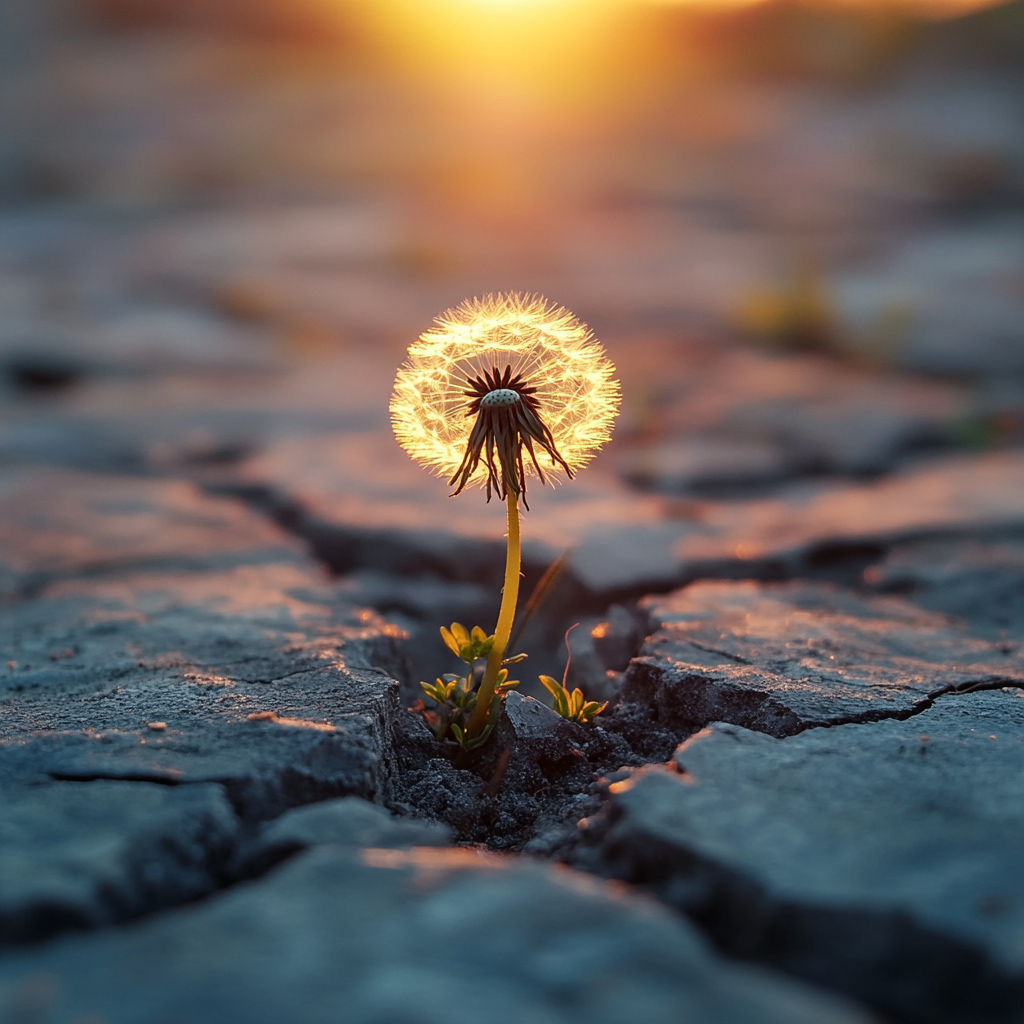
Weeding the Mind: Letting Go of What No Longer Serves You
A thriving garden isn’t just about planting new seeds—it’s also about removing the weeds that choke your growth. In the same way, emotional resilience isn’t just about adding positive habits; it’s about letting go of limiting beliefs, unhealthy coping mechanisms, and emotional baggage that no longer serve you.
Letting go isn’t always easy. Sometimes, we hold onto familiar thought patterns and habits because they feel safe—even when they hurt us. But just like a gardener must clear away the weeds for flowers to grow, you, too, must create space for resilience by clearing out what’s holding you back.
1. Identify Your Weeds
The first step to emotional growth is recognizing what’s no longer serving you.Studies show that cognitive restructuring techniques in Cognitive Behavioral Therapy (CBT) can help break negative thought cycles by reframing limiting beliefs .
Ask yourself:
- What’s one recurring thought that holds me back?
- Do I have any beliefs about myself that feel limiting or self-defeating?
- Am I holding onto past hurts, anger, or resentment that I need to release?
- Are there habits or coping mechanisms I rely on that don’t actually help me heal?
Often, we don’t even realize we’re carrying emotional weeds. Maybe you’ve been telling yourself, I’m not good enough, or I’ll never be able to change. Maybe you’ve been clinging to an unhealthy relationship, a toxic work environment, or a version of yourself that no longer fits who you are becoming.
It’s time to take inventory. Write down your weeds—the thoughts, beliefs, habits, or relationships that make you feel stuck. Seeing them on paper can help you recognize their power over you and begin the process of letting them go.
2. Challenge Negative Thought Patterns
Once you’ve identified your limiting beliefs, it’s time to challenge them. Often, our negative thoughts feel like the truth, but in reality, they are just stories we tell ourselves based on past experiences.
For example, if you think:
❌ I always mess things up.
✔ Try reframing it: I’ve made mistakes before, but I am learning and growing every day.
❌ I’m not strong enough to get through this.
✔ Reframe: I’ve faced challenges before, and I’ve overcome them. I am stronger than I think.
Cognitive Behavioral Therapy (CBT) techniques suggest questioning negative thoughts by asking:
- Is this thought based on facts or emotions?
- Would I say this to a close friend?
- Is there evidence that contradicts this belief?
By regularly questioning and reframing your thoughts, you weaken their hold over you and create space for resilience to grow.
3. Release Through Movement
Emotional pain isn’t just stored in the mind—it’s also stored in the body. If you’ve ever felt tight shoulders, a clenched jaw, or a heavy chest after a stressful situation, you know what this feels like.
Renowned trauma expert Bessel van der Kolk explains in The Body Keeps the Score that trauma lives in the body, and we must move to release it (van der Kolk, 2015).
Some powerful movement-based practices to release emotional tension include:
- Yoga – Helps release stored trauma through breathwork and gentle movement.
- Dancing – Shaking, swaying, and moving your body freely can help break up emotional stagnation.
- Tai Chi or Qigong – These slow, intentional movements are designed to regulate emotions and increase energy flow.
- Cardio Workouts – Running, swimming, or cycling can help physically release pent-up stress.
- Shaking Therapy (TRE – Tension & Trauma Releasing Exercises) – This method helps activate the body’s natural tremor mechanism to release deep-seated tension.
Try this:
Stand up, shake out your arms, bounce on your toes, and take a deep breath. Let your body move without restriction for 2–3 minutes. Notice how you feel afterward.
4. Let Go of Emotional Baggage
Holding onto past pain can feel like carrying a backpack full of heavy stones. Over time, this weight can weigh you down emotionally and physically.
Ways to let go:
- Write a letter and burn it – Express your anger, sadness, or regret, then let it go by burning or shredding the paper.
- Practice Forgiveness – This doesn’t mean excusing hurtful behavior, but rather, choosing to free yourself from resentment.
- Breathe it out – Inhale deeply, imagine gathering all the tension in your body, and exhale it out.
- Create a Releasing Ritual – Light a candle, speak your intention aloud, and visualize letting go of what no longer serves you.
5. Surround Yourself with Positivity
Once you clear out your mental and emotional weeds, fill the space with things that nourish you.
- Spend time with uplifting people who encourage your growth.
- Read books or listen to podcasts that inspire resilience.
- Speak kindly to yourself—your words shape your reality.
- Create a self-care routine that makes you feel safe and nurtured.
Letting go is a process. Some weeds have deep roots and will take time to fully remove. But with patience and self-compassion, you can clear space for new growth.
Remember: You deserve to grow. You deserve to heal. And you deserve to thrive. Here’s a free guide to help you write your own affirmations.
Harvesting Growth: Creating a Life Rooted in Strength and Compassion
Once your garden starts to bloom, here’s how to maintain your growth:
- Celebrate Your Wins: Every step forward matters.
- Stay Consistent: Resilience is built through daily habits.
- Pay It Forward: When you heal, you inspire others to do the same.
Resilience doesn’t mean you won’t face storms. It means you have the tools to weather them.
Conclusion: Your Garden, Your Power
By cultivating mindfulness and self-compassion, you’re planting seeds of resilience that will bloom into strength, confidence, and inner peace.
Your healing is your power. Keep nurturing your garden, and watch how it transforms your life.
Download Your Emotional Resilience Book here.
FAQ: Your Most Pressing Questions About Emotional Resilience
1. How long does it take to build resilience?
You may notice small shifts in weeks, but deep transformation happens over months or years.
2. What if I don’t have time for mindfulness?
Start small. Even one deep breath or a quick gratitude list makes a difference.
3. Can I build resilience while dealing with trauma?
Yes. Resilience and healing go hand in hand. Seek support if needed.